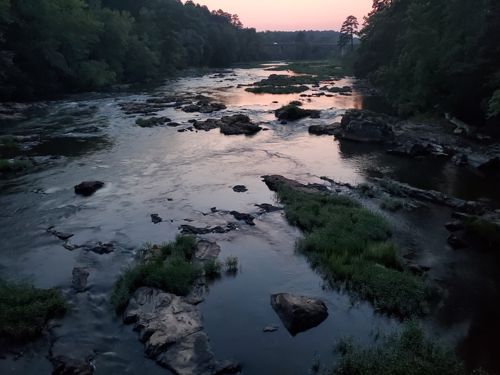
Of all the places in North Carolina I'll think back on fondly some day, the Haw River is probably the one I'll miss the most.
- Details
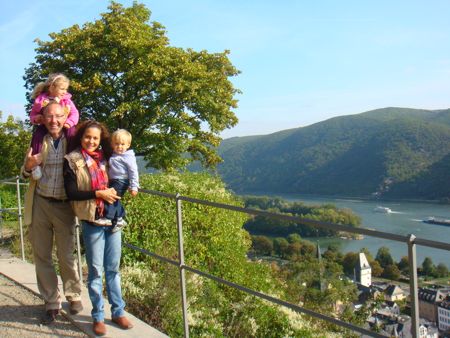
These are pictures we took in Bacharach, the heart of Germany's gorgeous Rhine Valley (Rhein in German) and an important wine-producing region. We spent two nights there enjoying the site of the river (fast moving,
and really churning at the banks), hiking up the hillside to the old castle (now a youth hostel and full of camped-out teenagers), and enjoying good schnitzel and sauerkraut.
But Bacharach had some surprises too:
- Details
White-Hair Point
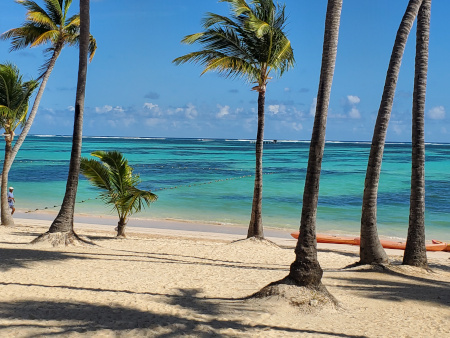
White-hair Point, at least, that’s what the signs all said. I can only assume the eastern terminus of the Dominican Republic used to be Punta Cana (Sugar Cane Point), since there are lots of similarly-named places across Latin America, and the Ñ was dropped to fare better in English-language databases and profiles. If so, it’s an apt metaphor for the place itself, which is only marginally a part of the Dominican Republic and instead caters to a foreign clientele unwilling to figure out how to say a word with an ñ in it.
- Details
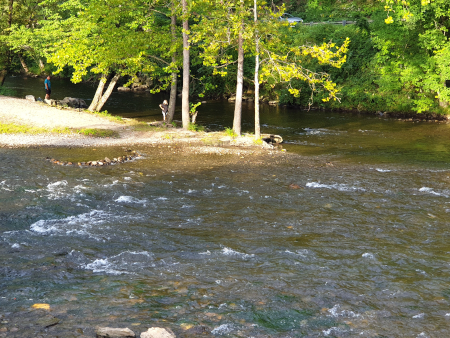
My ignorance unfurled before me like a sail.
Recently arrived in North Carolina, I bought a topographic map of the state and let my eyes explore. My gaze went naturally westward into the crinkled, mountain ridges of the higher elevations, picking out interesting places to explore. The name "Cherokee" leapt out at me. "Huh," I thought to myself, "Cool name, like the old Native American tribe. Wonder if they're related?"
Of course they're related.
- Details
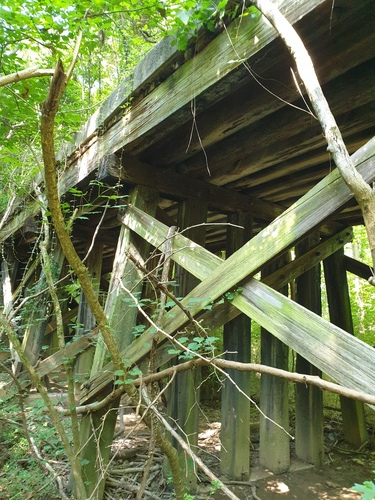
Back when North Carolina was called the Rip Van Winkle state, asleep while industry raged on all sides, local industrialists shared a vision of prosperity that only rail builders could usher in. It was the late 1800s, just four decades after the cease of Civil War hostilities, and North Carolina was suffering. But before the century would end, a network of steel rail would connect North Carolina's textile mills and tobacco farms to the markets of Virginia and harbors on the Atlantic. And there they would stay for about a century before consolidation, truck traffic, and changing interstate markets would make some of them superfluous.
- Details