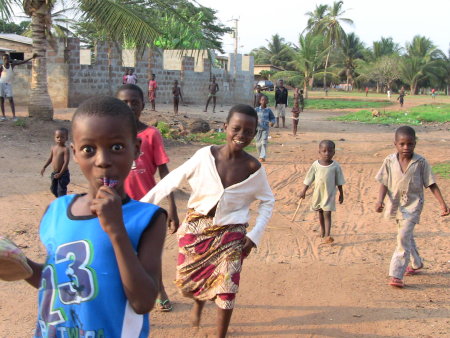
After well over a decade living and traveling in Latin America, Asia, and Africa, these are all names I've been called. Well, to be fair, names my friends – and probably some of you – have been called as well. It seems most cultures have a word that they use to refer to foreigners, and though it isn't necessary it is often offensive. Ted Simon was right: the one characteristic all cultures share is xenophobia.1
Latin America
| Gringo | Spanish (Latin America) | Nobody knows the origin of this word, and the tentative explanations are almost too far-fetched to be true ("Griego (Greek)", "Green go" (color of the dollar bills). The word can be affectionate or offensive depending on how it's said, and by whom. |
| Chele | Spanish (Nicaragua) | Simply refers to light colored skin, and Nicaraguan use it regularly among themselves. I was once offended by someone saying "chele" only to discover he wasn't even talking to me. |
Africa
| Anasara | Hausa (Northern Niger) | |
| Baturi (men), Baturia (women) | Djerma (Southern Niger) | |
| Toubabou | Djoula (Cote d'Ivoire) | |
| Blofue | Baoule (Cote d'Ivoire) | |
| Baturé | Bariba (Northern Benin) | |
| Fote | Guinea (Conakry) | |
| Lekoa | Botswana | Possibly "from the sea" or "the crazy people" |
| Ferenje | Ethiopia/Eritrea | I'm told the "ferenje" is also used as a menace with little children: if you don't eat your vegetables, the "ferenje" will come. Probably a pretty effective threat, except that I'm not sure the White Man eats many more vegetables than many others! |
| Mundele | Lingala (Democratic Republic of Congo – former Zaire) | Not necessarily offensive, it simply means "foreigner" and can even be used for Asians or Arabs. |
| Ntangan | Beti (Southern Cameroon) | Not a flattering word. |
| Obruni | Ewe (Ghana) | |
| Nansala | Twi (Ashanti, Central Ghana) | |
| Moutangani | Gabon | |
| Branco/Branca | São Tomé, Cape Verde | "White" in Portuguese, of course. In S.T., at least, it's best uttered at the top of your voice and repeatedly for best effect. |
| Nasara | Fulfulde (Peulh) (Northern Cameroon) | Potentially from the word "Nazareth", as early contact with foreigners was often with Christian missionaries preaching Jesus of Nazareth. |
| Nasara | Burkina Faso | Still Peulh country! |
| Onye ocha | Yoruba (Nigeria) | Simply "white person" and not meant to be offensive, though thin-skinned whites manage to get offended anyway, since it's possible to hear it somewhat incessantly. |
| Yovo | Fon/Mina (Benin, Togo) | Simply the Fon word for "white" You'll know it by heart: children everywhere sing "yovo yovo bonsoir, ça va? merci" whenever they see a yovo, apparently because the French used to reward them with a coin whenever they did so (merci beaucoup, les Français!) |
| Toubab | Wolof (Senegal and Gambia) | Totally inoffensive, "toubab" simply means "guest" and is used very matter-of-factly. A similar word, "Touba" refers to a holy city, the center of the Mourid Muslim faith. |
| Mzungu | Swahili (Kenya, Tanzania) | Not overly offensive, but you will hear it an awful lot from the street kids in Dar and/or Nairobi. |
| Gowri (s), Gwer (p) | Morocco | Potentially an old Berber word? Also in use are "Romi" (from "the Romans" and "nasrani" from the Arabic. |
| Howwaga | Egypt |
Asia and the Pacific
| Bule | Bahasa Indonesia | Comes from the word "Belanda" ("Dutch"). This word ranks with Gringo in offensiveness but is slightly less friendly. It's not necessarily disparaging, but you'll hear it enough to eventually find it annoying. |
| Londo | Javanese (Indonesia) | This, too, comes from "Belanda" ("Dutch") |
| Farang | Thai | From "French" |
| Barang | Khmer (Cambodia) | From "French" |
| Ong Tay | Vietnam | Simply means "Person from the West"; when they want to introduce a note of derision they simply add "balom", which means "with a backpack" |
| Falang | Laos | |
| Ang Mo | Hokkien/Mandarin (Singapore) | |
| Angrezi | India and Pakistan | From "English") |
| Joe | Tagalog (Philippines) | A relic from the long US military presence in the Philippines, and lots of soldiers named "Joe" |
| Palangi | Polynesia | |
| Popa'a | Tahiti | Popa'a Marite: "American", Popa'a Farani: "French", Popa'a Tinito: "Asian", |
| Condotle | Papua New Guinea |
1) Ted Simon, Jupiter's Travels –Four Years Around the World on a Triumph, Simon and Schuster 1978, Jupitalia Productions 2005.
Thanks to Sarah, Bak, Iffy, Zach, Jamie, Kitty, Phyllis, Fabio, and everyone else who contributed to this fun list.